Best Time to Snorkel in Cabo San Lucas: Month by Month
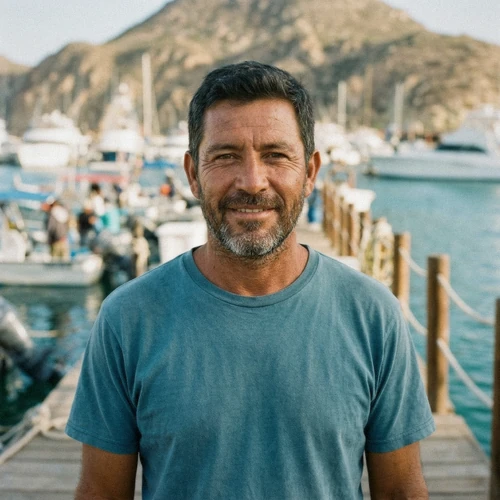
October is the best time to snorkel in Cabo San Lucas, when the water sits near its warmest and the bay holds its clearest visibility of the year. August through November keeps that same warm, clear run going, May through July trades a couple of degrees for quieter boats and better value, and December through March turns cool and calm with humpback whales passing offshore. April is the hinge month between the two halves of the year, warming fast as whale season winds down. We have run panga trips out of the marina since 2011 and watched this pattern repeat every season, so what follows is the real month-by-month picture rather than a marketing calendar. For the current lineup, see snorkel tours running out of Cabo San Lucas.
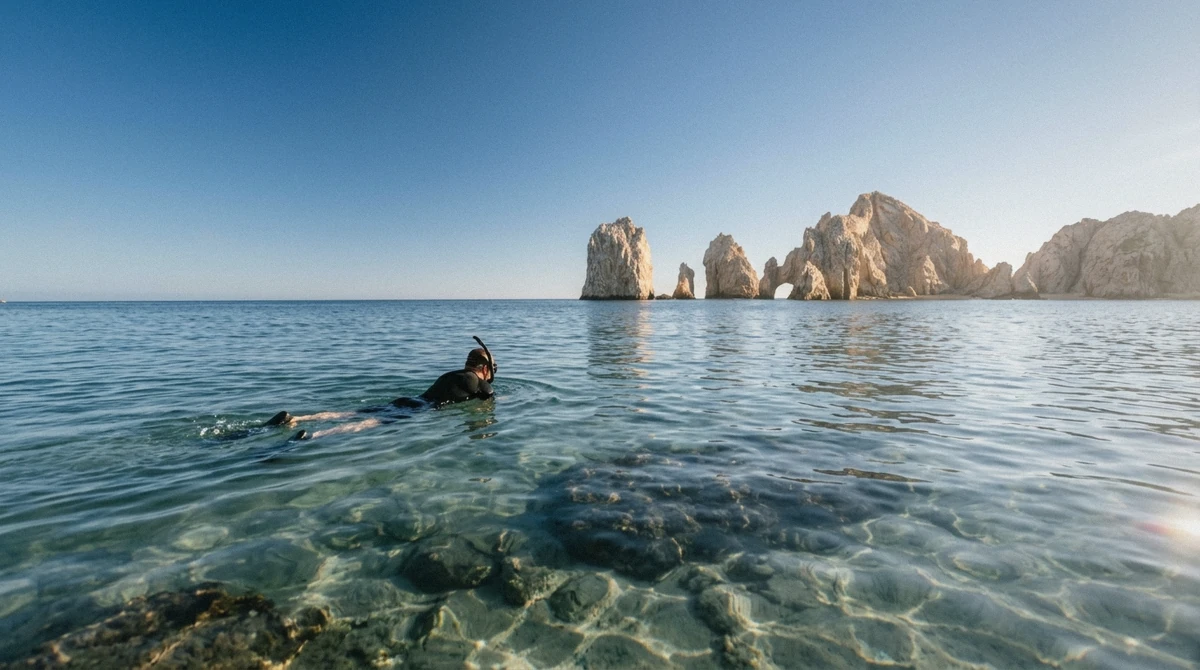
Quick answer
The best time to snorkel in Cabo San Lucas is August through November, with October the strongest single month for warm water and clear visibility. May through July is a solid, cheaper runner-up. December through March is the window to plan around rather than avoid outright, since the water cools but humpback whales arrive offshore.
Key takeaways
- Best window: August to November, with October the strongest all-round month for warmth and clarity
- Runner-up: May to July, a couple of degrees cooler and noticeably quieter on the boats
- Month to avoid if clear skies matter most: September, the wettest month at about 81 mm of rain and the peak of storm risk
- The real visibility killer is wind and post-storm runoff, not rain by itself, more on that below
- Morning departures are calmer everywhere, and the crowd-free morning panga snorkel at $70 times its trips around that window
- Hurricane season runs 15 May to 30 November, and a genuine storm can trigger a port closure that grounds every boat, not just the weaker operators
Seasons at a Glance
Read the Verdict column below as our call after years on the water, not a promise about your exact dates. The short version: four broad windows, each with a real trade-off, then the full month-by-month numbers underneath.
| Season | Months | Sea Temp | Verdict |
|---|---|---|---|
| Warm and Clear | August to November | 79°F to 86°F | Best overall stretch, storm risk builds late |
| Warm and Quiet | May to July | 75°F to 83°F | Comfortable water, thinner crowds, better rates |
| Cool and Whale Season | December to March | 70°F to 75°F | Coolest water, humpbacks offshore |
| The Turning Point | April | 72°F | Warming fast, whale season closing out |
Now the full grid. These are typical monthly averages, not a forecast for your dates, so treat every figure as a pattern rather than a guarantee.
| Month | Sea Temp | Air High | Rain | Snorkel Verdict |
|---|---|---|---|---|
| January | 72°F / 22°C | 27°C | Very dry | Cool, clear, whale season |
| February | 70°F / 21°C | 27°C | Very dry | Coolest water of the year |
| March | 70°F / 21°C | 28°C | Driest month | Cool, calm, quiet reef |
| April | 72°F / 22°C | 29°C | Driest month | Warming, whale season ends |
| May | 75°F / 24°C | 31°C | Dry | Comfortable, good value |
| June | 79°F / 26°C | 33°C | First storms possible | Warm, quiet, cheaper |
| July | 83°F / 28°C | 34°C | Occasional storms | Hot and warm-water |
| August | 85°F / 29°C | 35°C | Storm risk building | Warmest stretch begins |
| September | 86°F / 30°C | 35°C | Wettest month, about 81 mm | Warmest water, highest storm risk |
| October | 84°F / 29°C | 33°C | Easing | Best all-round month |
| November | 79°F / 26°C | 30°C | Dry again | Excellent, calmer crowds |
| December | 75°F / 24°C | 27°C | Very dry | Cooling, whales arriving |
Figures are typical monthly averages, not a forecast for your dates. The sea runs from about 70°F (21°C) in February and March up to about 86°F (30°C) in September, the widest swing of the year. September is also the wettest month on the local calendar at roughly 81 mm, against an annual total of around 250 mm for the whole town, so most months stay genuinely dry.
One more local quirk worth knowing before you pick a beach: the Pacific side of the peninsula runs 5 to 10°F cooler than the Sea of Cortez side at the same time of year, which is one reason Land's End and Santa María feel different from a beach facing the open Pacific.
Best Season by Traveler Type
If You want the warmest water and the best visibility
Book August to November, when the sea runs 79°F to 86°F and visibility tends to peak around October
If You are watching your budget
Aim for May to July, when the water is still a comfortable 75°F to 83°F and boats run quieter, better-value trips
If You want a shot at humpback whales from the boat
Go December to March, strongest January through March, even though the water cools to 70°F to 75°F
If This is your one shot and a cancelled morning is not an option
Lean toward the months outside 15 May to 30 November, before hurricane season opens the door to a port closure
If Your dates are already fixed in April
April works well, the water is warming past 72°F and whale season is just closing out, so book an early morning slot
August to November: Warmest Water and Clearest View
This is the stretch we point most people toward. The sea climbs from 85°F in August to its yearly peak of 86°F in September, then eases only slightly to 84°F in October and 79°F in November. Reported visibility runs 40 to 80 feet through this run and tends to be clearest in the autumn end of it, once September's rain has passed and the water settles.
October is genuinely the strongest all-round month: warm water, easing storm risk, and crowds that have thinned out from the summer peak. September carries the trade-off, it is the wettest month at about 81 mm of rain and the point of highest storm risk on the calendar, so if you have any flexibility, shift a September booking toward late in the month or into October if you can. Boats through this window book up reasonably fast once October arrives, so a week or two of lead time is worth having.
The crowd-free morning panga snorkel at $70 runs its calmest departures right through this stretch, before the afternoon breeze builds.
May to July: Warm, Quieter, Better Value
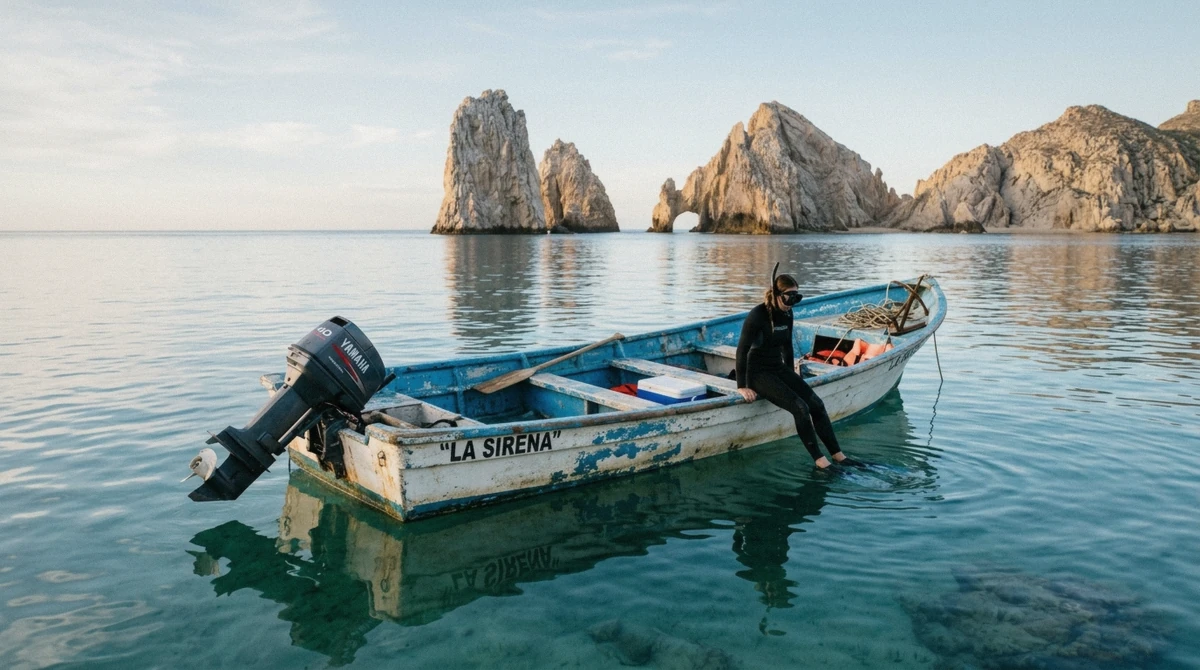
May opens at a comfortable 75°F and climbs to 83°F by July, warm enough for most people to skip a wetsuit top entirely. Crowds are noticeably thinner than the August to November run, and prices on quieter departures tend to reflect that, since operators are not filling boats to capacity the way they do in peak months. The catch is that hurricane season technically opens on 15 May, though June and July carry far less real storm activity than August through October, more a possibility on the calendar than a pattern you will likely run into.
Visibility holds up reasonably well through this stretch, just without the extra clarity autumn tends to bring. If value and lighter boats matter more to you than squeezing out the last degree of water temperature, this is the window. For a full breakdown of what a trip actually costs across the seasons, our snorkeling in Cabo San Lucas cost guide lays out the numbers, and the luxury catamaran two-bay snorkel with lunch at $149 runs comfortably through these months without the summer crowds.
December to March: Cool Water, Whale Season
This is the coolest stretch of the year, dropping to 70°F in February and March, the low point on the whole table. Air temperatures stay pleasant, in the high 20s Celsius, so it is a comfortable time to be on a boat even if the water asks for a bit more nerve going in. The trade for the cooler water is humpback whales, present in Los Cabos waters from roughly mid-December to mid-April and strongest January through March.
Whales are always a from-the-boat sighting on these snorkel trips, never an in-water encounter, and we cover the full likelihood picture, along with everything else that turns up underwater, on our Cabo San Lucas marine life guide. Rain is essentially a non-issue this time of year, January and February both run very dry, and the reef stays calm and quiet with far fewer boats out than in high summer.
April: The Turning Point
April sits between the two halves of the year and does not fully belong to either. The water is warming, up to 72°F from March's 70°F, air highs are climbing toward 29°C, and it is the driest month on the whole calendar alongside March. Whale season is winding down through this month, so an April trip can still catch a late sighting, though the odds drop noticeably compared to January through March.
It is a genuinely good month with no real downside we would flag, more a quiet hinge than a headline. Crowds sit at a moderate level, ahead of the May start of hurricane season and behind the busier winter holiday weeks.
What Actually Changes the Water
Most people assume rain is what ruins a snorkel day in Cabo. In practice, rain itself does very little to the water. What actually flattens visibility is wind and the runoff that follows a real storm, sediment pushed off the desert hillsides into the bays, which can cloud the water for a day or two afterward even once the sky has cleared.
A light shower that passes through overnight with calm winds behind it often leaves the reef looking exactly as it did the day before. This is also why the calendar's storm-risk months, August through October, are not automatically write-offs, a passing squall with little wind rarely does lasting damage, while a genuine tropical system can turn a bay cloudy for days.
The other consistent pattern we have watched for years is the wind curve across the day. The bay tends to be at its glassiest in the early morning and the breeze builds steadily as the day goes on, which is the whole reason every operator we compare runs its calmest departures before midday.
Best Time of Day to Snorkel
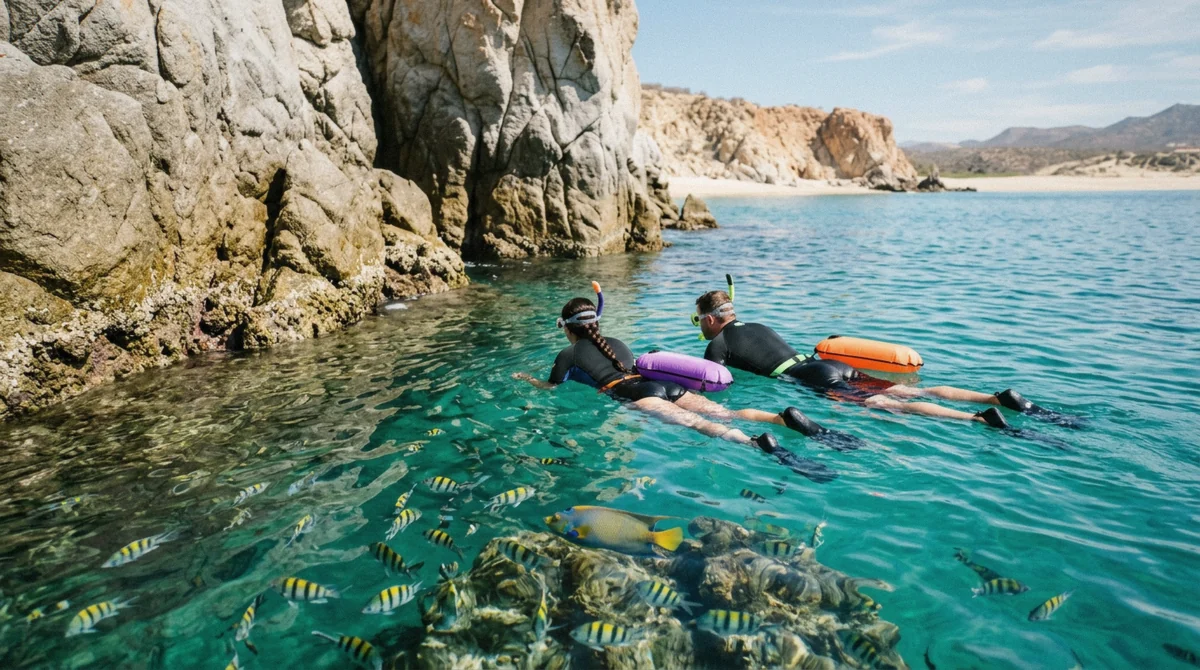
Morning, without much of a caveat. The bay is glassiest in the first hours after sunrise, before the afternoon wind builds and chops up the surface, so a morning departure gives you calmer water, easier snorkeling for weaker swimmers, and usually a quieter boat, since most tour groups also gravitate toward the early slots. By early afternoon the breeze off the point is a regular feature most days, manageable but noticeably rougher than a 7 or 8am departure.
If your schedule genuinely only allows an afternoon trip, it is not a wasted day, just expect more chop and slightly less comfortable conditions for anyone prone to seasickness. The Cabo Arch and Lover's Beach snorkeling tour is one of the ones we point people toward for an early slot, since it reaches the calmest water of the bay before the wind picks up.
Hurricane Season and What It Means for Your Tour
The Eastern Pacific hurricane season officially runs 15 May to 30 November, with the heaviest activity falling August through October. That is a wide window, and most days inside it are completely ordinary, sunny mornings, calm water, nothing to worry about. What actually stops a tour is not the calendar date but a specific mechanism: when a real storm approaches, the Capitania de Puerto, Mexico's port authority, raises the red flag and orders a cierre de puerto, a port closure that suspends small-vessel navigation across the board.
Every snorkel boat stops at once, not because one operator is more cautious than another, but because the port itself is closed to small craft. This has happened repeatedly in recent seasons and it is the real trigger to understand, rather than assuming any day with a cloud on the horizon is a lost trip.
Outside of an actual named storm, day-to-day rain in Cabo rarely closes anything. The distinction that matters is between an ordinary wet morning, which a boat will run through without issue, and a genuine tropical system serious enough for the port authority to ground the fleet.
If Your Tour Is Cancelled
Every tour we compare here carries free cancellation up to 24 hours before departure, and if the operator itself has to cancel because the port is closed, the standard is a refund or a rebooking, not a lost trip. In practice this means a genuine weather cancellation costs you nothing beyond the inconvenience of shifting your morning.
The one habit that protects you most is booking your snorkel early in the trip rather than on your last full day. A closed port on day two still leaves days three and four as reschedule room, while the same closure on your final morning leaves nothing. If your dates are anywhere near the August to October peak of storm risk, build that slack in from the start rather than hoping for the best on the last available slot.
So When Should You Book
Book August through November if your dates are flexible, and lean toward October specifically if you want the single strongest combination of warm water, clear visibility and manageable crowds. May through July is the honest budget-friendly runner-up, a couple of degrees cooler but noticeably quieter and often cheaper. The month to actively plan around, not avoid outright, is September, the wettest month on the table and the peak of storm risk, though even then a well-timed morning trip usually goes off without issue.
Whatever window you land in, check current departures and prices before you lock in dates, since availability on the earliest morning slots is the first thing to fill once a season gets busy.
Frequently Asked Questions
What is the best time of year to snorkel in Cabo San Lucas?
August through November, with October the strongest single month for warm water, clear visibility and easing storm risk. May through July is a solid, cheaper runner-up.
How warm is the water in Cabo San Lucas by month?
It ranges from about 70°F (21°C) in February and March up to about 86°F (30°C) in September, with a comfortable middle stretch through May to July. Where you snorkel matters too, see our guide to the spots themselves for how each one handles the swing.
When is visibility best for snorkeling in Cabo San Lucas?
Reported visibility runs 40 to 80 feet through the year, generally clearest in the autumn once September's rain has passed, which lines up with October's strong all-round conditions.
Can you snorkel in Cabo San Lucas in winter?
Yes. Water cools to 70°F to 75°F from December to March, but the reef is calm, rain is minimal, and it is the best window for a humpback whale sighting from the boat, covered in full on our marine life guide.
Does hurricane season stop snorkeling tours in Cabo San Lucas?
Most days inside the 15 May to 30 November season are unaffected. Tours stop only when the Capitania de Puerto orders a port closure ahead of a genuine storm, which grounds every boat at once rather than being one operator's individual call.
Is morning or afternoon better for snorkeling in Cabo San Lucas?
Morning, clearly. The bay is glassiest right after sunrise, before the afternoon wind builds, and every operator we compare runs its calmest departures before midday.
What happens if a snorkeling tour is cancelled for weather?
You get a refund or a free rebooking, the standard on every tour we compare. Booking early in your trip rather than on the last day leaves room to reschedule if a port closure hits.
Last verified: August 2026. Conditions in Cabo shift year to year the way they do everywhere, so treat everything above as the pattern we have watched hold for over a decade rather than a promise about the specific week you are booking. Pick your window, book an early slot, and let the free cancellation policy handle whatever the sky decides to do.